Changelog
Tieni traccia dei cambiamenti e degli aggiornamenti dell'API Chargetrip.
Route matching
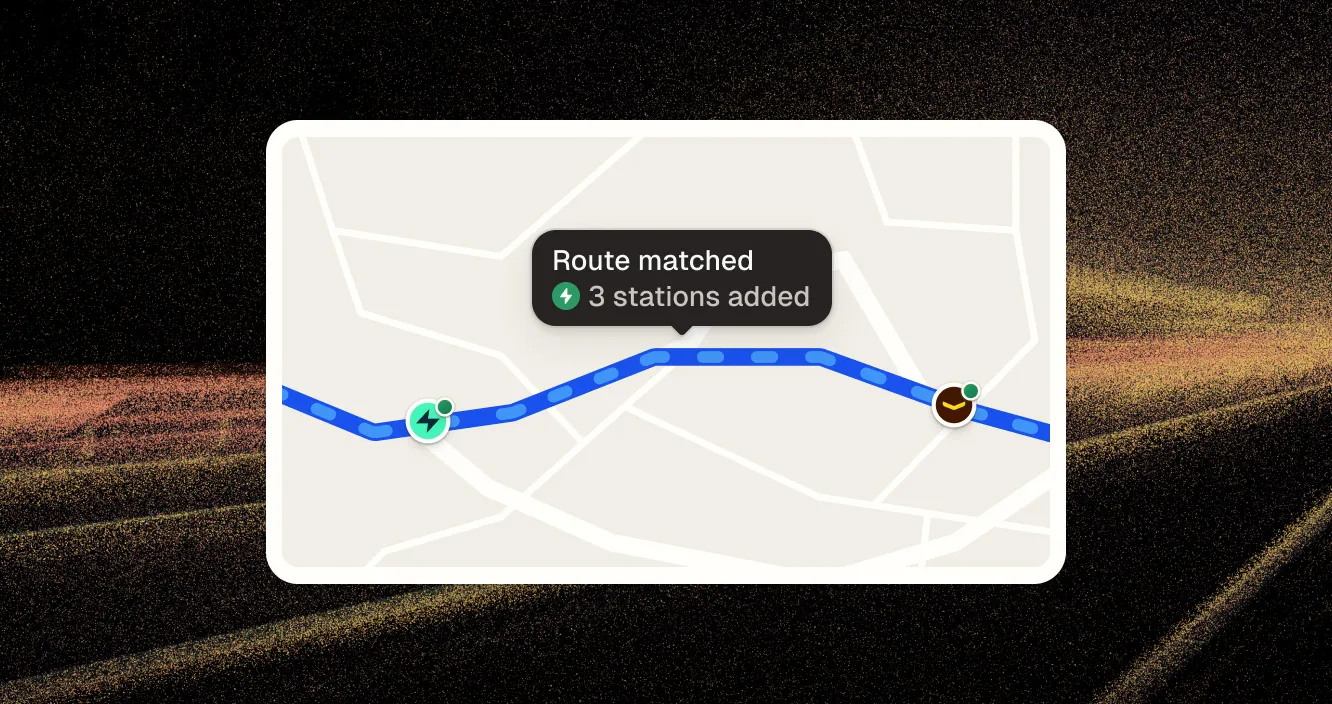
We have introduced Route Matching operations, allowing you to map-match external GPS traces and run them through our Routing Engine to calculate energy consumption and insert optimal charging stops.
- Calculate matched routes from coordinate sequences using the new
createMatchedRoutemutation; - Designate intermediate stopovers using
viasdefined by coordinate array index (via.index), with support for updating vehicle passenger counts and cargo weight dynamically along the journey; - Enable
plan_charging_stops: trueto evaluate vehicle energy consumption along the pre-determined path and automatically insert compatible charging stops when needed; - Query full CO₂ emissions profiles for completed matched routes using
getRouteEmissions.
Improvements
- Updated the operator query to accept an external_id next to the internal id.
Fixes
- Fixed an issue where signing up to the dashboard with an email address containing uppercase letters prevented pending workspace invitations from being displayed upon login.
- Fixed a calculation and rounding discrepancy where the sum of leg section driving durations did not match total driving durations (
durations.driving) in route details.
Subscriptions v2
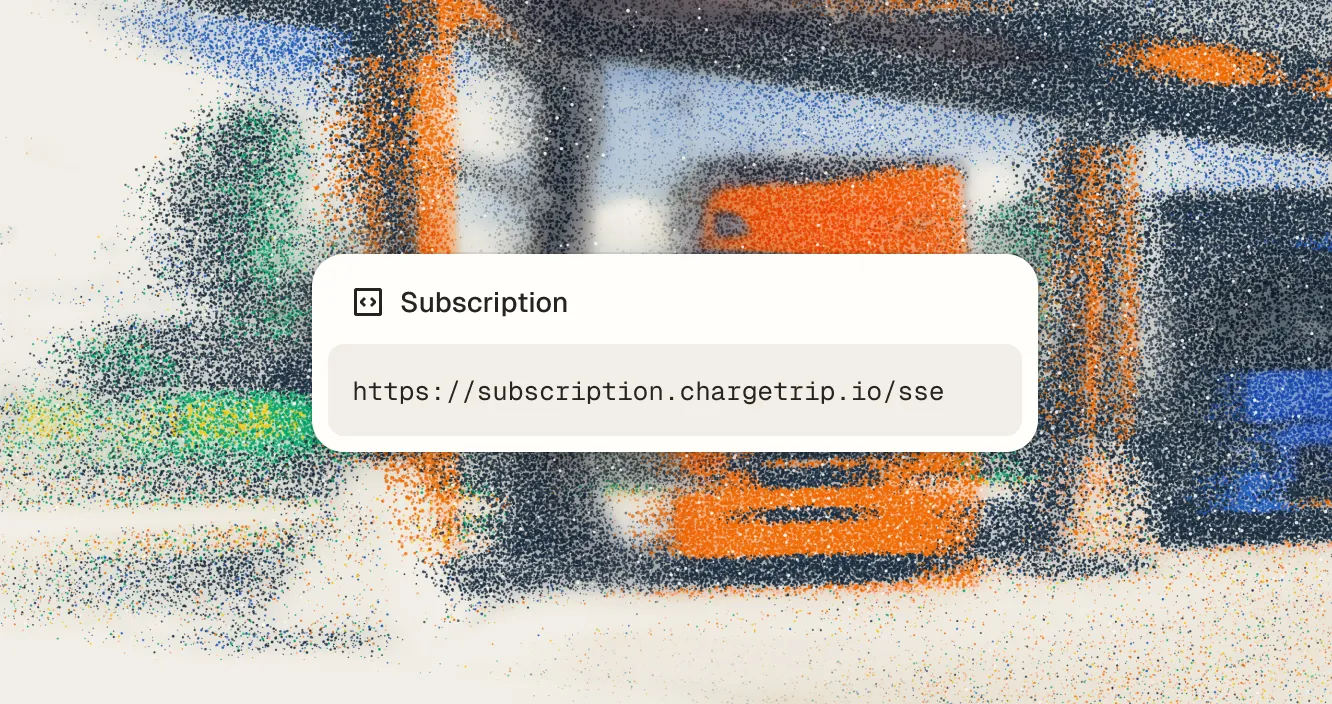
We have launched a new subscription service hosted under a dedicated domain (subscription.chargetrip.io), delivering enhanced reliability, standard subprotocols, and new transport choices.
- Connect via WebSocket over
wss://subscription.chargetrip.io/wsusing the moderngraphql-transport-wsprotocol; - Stream subscriptions over HTTP using Server-Sent Events via
https://subscription.chargetrip.io/sse; - Active subscription connections automatically close when a resource reaches its final state (such as
done,error, ornot_foundfor routes/isolines, andfinishedorerrorfor navigation); - Error payloads now follow consistent GraphQL error conventions with structured extensions metadata.
Station boosting groups on station queries
We extended station queries to provide visibility into whether a station belongs to an active boosting group.
- Added the
boosting_group_idsfield to theStationtype acrossstation,stationList, andstationAroundqueries; - Returns an array of active boosting group IDs configured for your project, returning an empty list (
[]) if the station is not currently boosted.
Fixes
- Fixed an issue where routes with multiple ferry connections could result in routes to arrive at charging stations with a negative State of Charge.
- Fixed an issue where calculating routes between origin and destination points located very close to each other produced an invalid line string error and failed with a 404 response.
Influence routes with Station Boosting
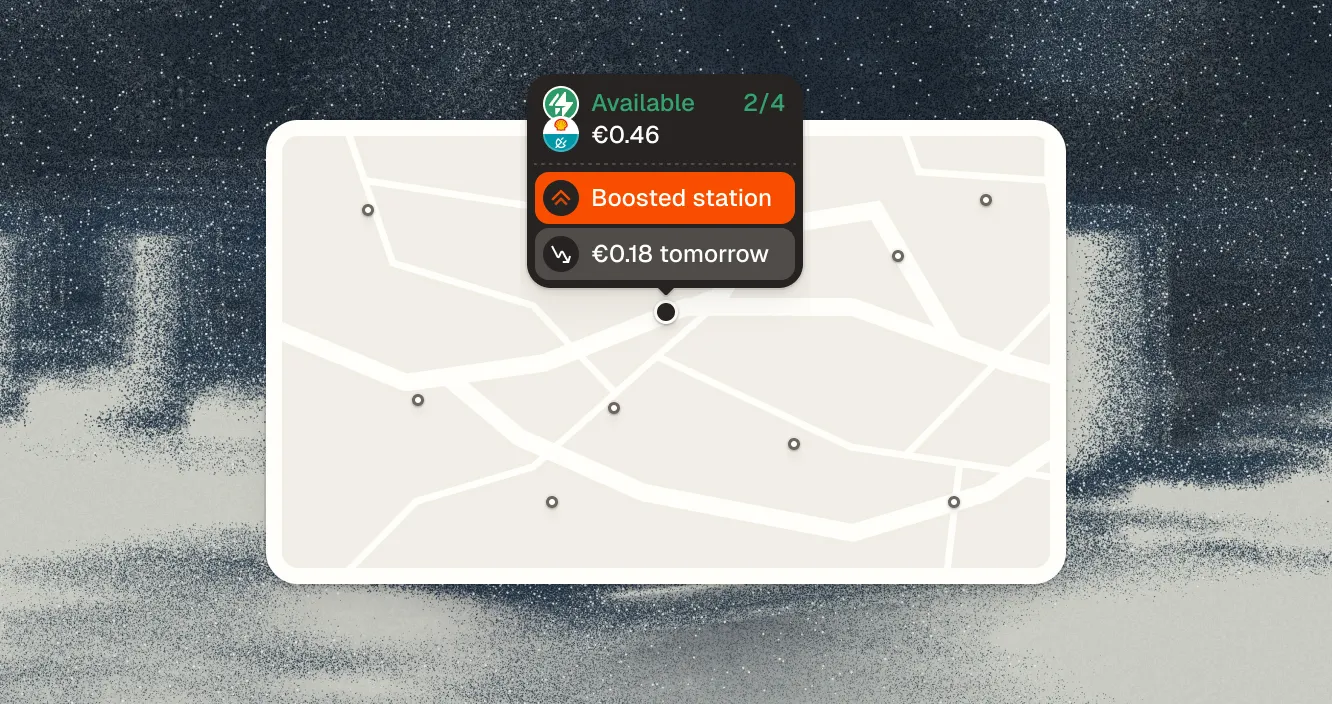
For businesses looking to maximize network utilization, honor partner agreements, or guide drivers to specific high-margin charging stations, Station Boosting offers a streamlined way to influence routing decisions. Available in Alpha, this feature gives you direct control over how specific charging locations are prioritized without adding unnecessary operational complexity.
- Targeted Client Groups: Create up to 5 distinct groups per environment (with up to 50 specific stations per group) to run targeted regional or time-based campaigns.
If you would like to test this feature and start steering volume to high-priority hardware, please reach out to your Customer Success Manager to manage your configuration.
Configurable maximum charging SoC & expanded battery limits
Drivers can now configure the maximum State of Charge (SoC) for charging stops between 80% and 100%, and plan trips requiring higher remaining battery levels upon arrival.
- Pass
maximum_state_of_charge(80–100%) increateRoute(RouteVehicleChargingInput). When set, vehicles can charge beyond the default 80% ceiling during planned or unplanned stops across bothALWAYS_TO_MAX_CHARGEandOPTIMIZE_TRAVEL_TIMEmodes; - Configure
final_state_of_chargeup to 80% of vehicle battery capacity (increased from 60%); - Added two new SoC leg warnings:
risk_margin_soc_not_possiblewhen expected arrival SoC falls below the safety risk margin, andfinal_soc_below_risk_marginwhen the requested final SoC falls below the safe risk margin.
Improvements
- Added
typeandregionarray filters tovehicleMakes(VehicleMakesFilter), allowing clients to filter brands that offer specific vehicle types or operate within designated geographical regions. - Added
model_counttoVehicleMakeandvehicle_counttoVehicleModelto expose real-time counts of accessible models per make and vehicles per model. - Implemented cursor-based pagination arguments (
firstandafter) along withtotal_countandpage_infoon thevehicleMakesquery. - Updated
vehicleMakesand vehicle queries to return country-specific brand logos when a country filter is supplied, falling back to global images when localized assets are not configured.
Fixes
- Fixed an issue in
vehicleListwhere filtering by make name failed after introducing make IDs, restoring backward compatibility sofilter.makeaccepts both make IDs and make names. - Fixed an issue where routes starting with an initial State of Charge below the safety risk margin (
initialSOC < safeRiskMargin) drove until reaching 0% battery instead of routing to the nearest available charging station. - Fixed an issue where the sum of individual leg section durations did not align with total driving durations (
durations.driving) in route details.
Truck routing
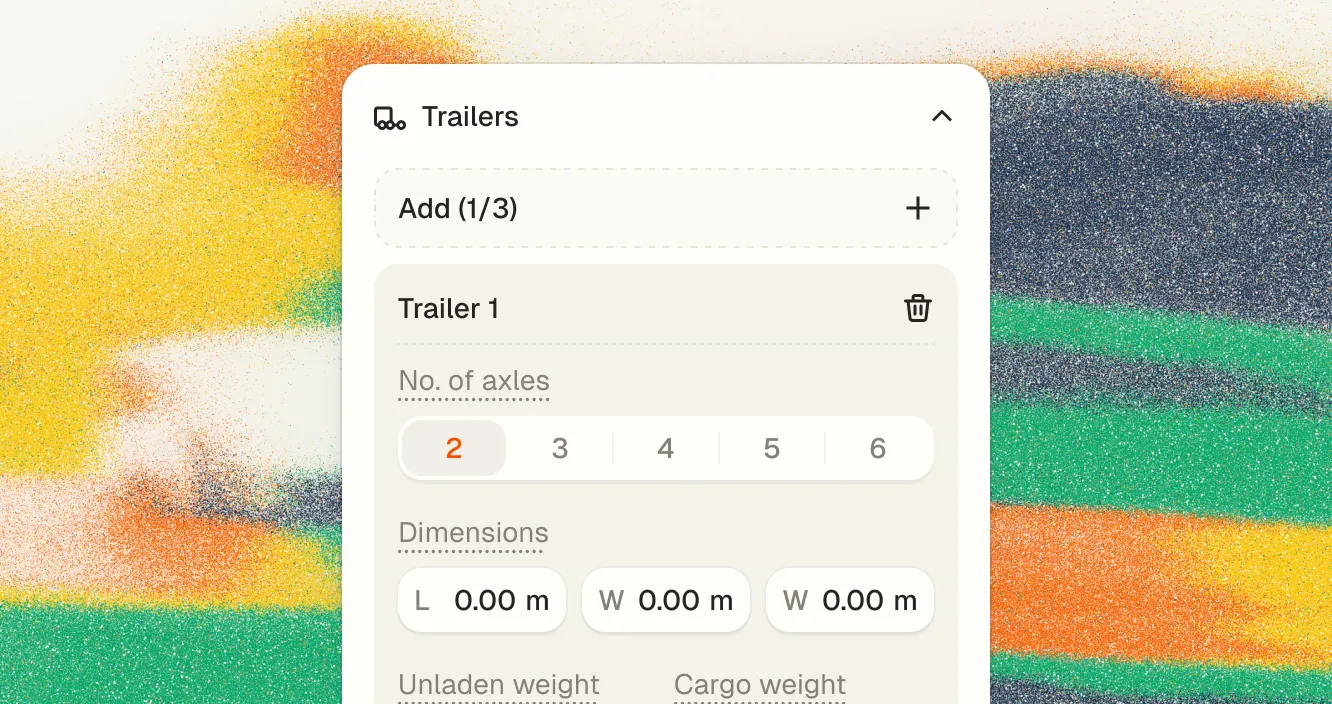
We have officially launched our dedicated truck routing engine on the backend. Accessible via a brand-new set of queries and mutations, this standalone API feature factors in weight limits, height clearances, and truck-specific energy consumption models to build dependable commercial routes for heavy electric vehicles.
Improvements
- Improved validation and diagnostic error reporting when specifying via charging stations in createRoute, returning explicit error codes (
ROUTE_STATION_OUT_OF_SERVICE,ROUTE_STATION_INVALID_CHARGER, and refinedROUTE_STATION_INVALID_SPEED) when charging is not possible, and introducing the via_station_below_minimum_power leg warning when available connectors fall below the requested minimum_power threshold.
Fixes
- Fixed an issue where total driving and trip durations (
durations.drivinganddurations.total) on recommended and alternative routes omitted congestion delays whentraffic_awarewas enabled. - Fixed an issue where routes ending at a charging station recorded an erroneous charging duration on the final leg and added an extra charge stop to the route’s total
chargescount. - Fixed an issue where filtering
vehicleListbymakeormodelstrings containing special characters (such asLynk&Co,e.GO,ID.7, orN°4 E-Tense) returned empty results. - Fixed an issue in
amenityListwhere filtered POI search results did not match the station’s total amenity count.
Experimental and deprecation API warnings
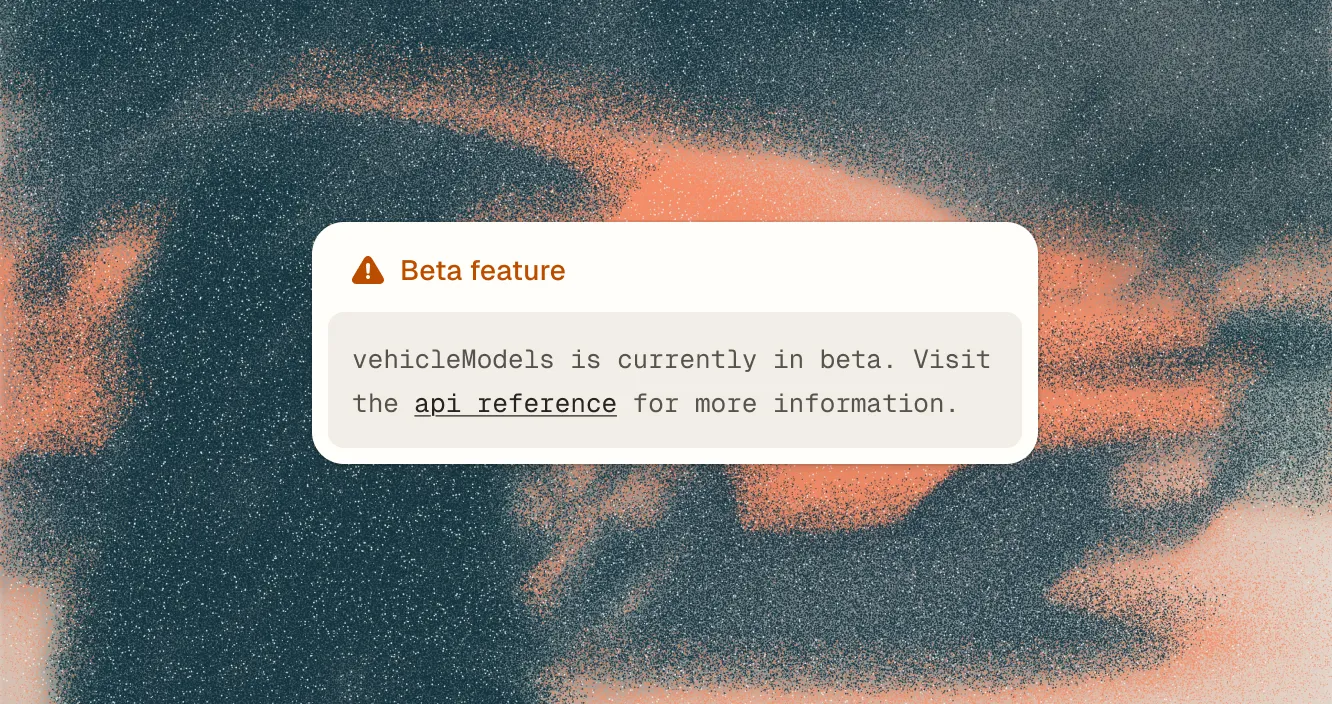
We have introduced lifecycle warnings in GraphQL response extensions to inform developers whenever a requested operation or field is in alpha, beta, or scheduled for deprecation. This provides direct visibility into feature maturity and upcoming deprecations without disrupting API responses.
What’s new:
- Lifecycle notifications: Receive structured alerts under
extensions.warningswhenever your request touches schema elements marked with@experimental(stage: "alpha"),@experimental(stage: "beta"), or@chargetripdeprecated; - Consistent delivery: Warnings are included across all responses regardless of whether the operation succeeds or returns errors.
Improvements
- Extended
createIsolineto support custom weather conditions (temperature,air_pressure, andsolar_irradiance) alongside standard presets (summer,winter,actual) via the newweatherinput, deprecating theseasoninput. - Added station operating status warnings at the route leg level (
station_closed,station_closing_soon, andstation_unknown_open_hours) and refinedstation_limited_open_hoursto warn drivers when a station on their route may be closed or have limited/unknown operating hours upon arrival. - Standardized schema annotations by replacing hardcoded
[BETA]text descriptions with the formal@experimental(stage: "beta")directive across the Isoline, Routing V2, and Navigation GraphQL schemas.
Fixes
- Fixed an issue in getRoute where savings.money returned null instead of 0 on BEV routes when no monetary savings were accrued.
Alternative routes
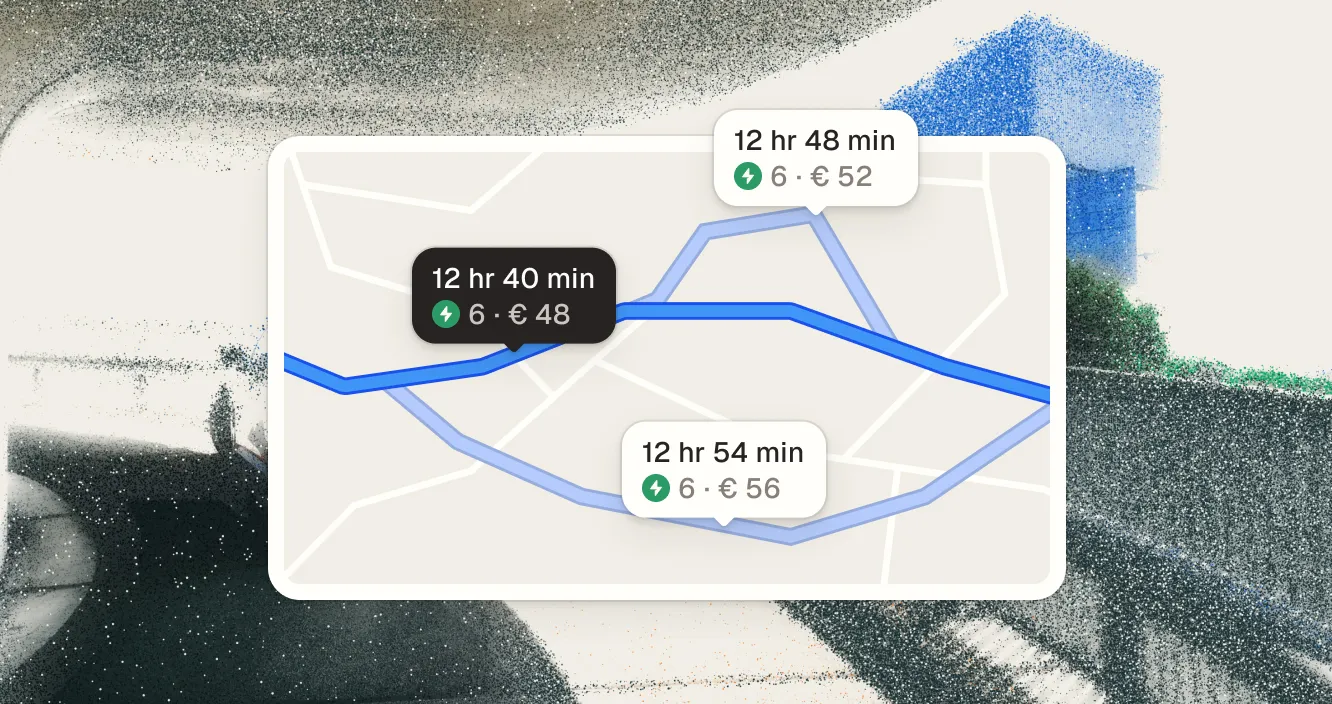
You can now request geographically different alternative routes alongside the recommended route during route calculation. This allows drivers and dispatchers to evaluate alternative paths based on their preferences while maintaining the same trip constraints. You can specify up to 2 alternative routes.
Fixes
- Fixed an issue where providing empty
viawaypoints without geometry, location, or station IDs increateRoutefailed silently with anot_foundstatus instead of returning aROUTE_VIA_LOCATION_MISSINGvalidation error. - Fixed an issue in
operatorListwhere queries using ranking filters returned empty results if the project had no excluded countries configured, ensuring operators matching ranking preferences are returned correctly.
Traffic
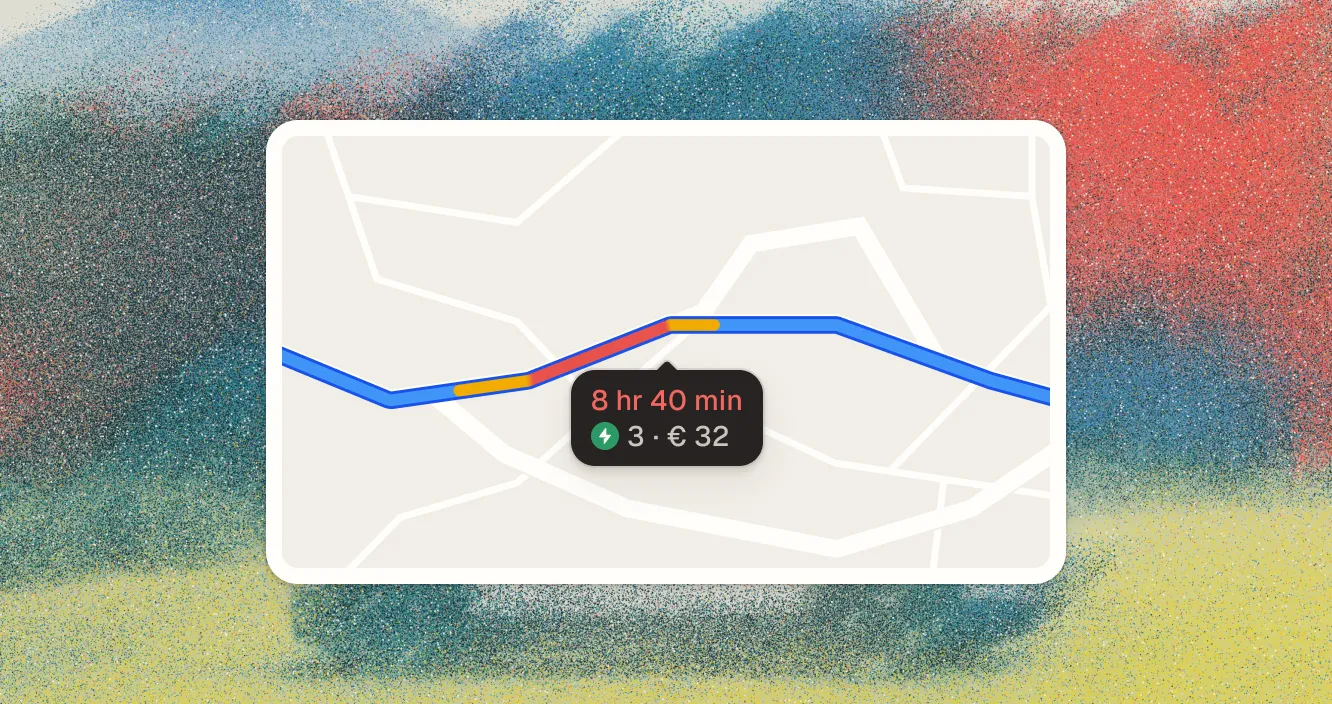
Enable traffic-aware routing for global traffic impact when calculating routes. Accounting for traffic and incidents while optimizing for charging has long been seen as the holy grail of EV route optimization. When enabled, the route response includes:
- Segments of the route affected by traffic;
- Level of congestion on those segments;
- Delay added to the total route duration.
This provides a more realistic estimate of travel time when traffic conditions affect the route and allows you to give globally optimized routes to your customers ready for turn-by-turn navigation.
Route warnings
Routing is often a best-effort process. Sometimes the routing engine cannot fully satisfy all requested conditions. Warnings help explain why a route may differ from the original request. Examples include:
- Unavailable operators: stations with preferred charging operators are not available for this route leg.
- Constraints: the requested final state of charge could not be achieved.
Warnings allow front-end teams to surface useful feedback to drivers or give engineers deeper insight into routing behavior. This makes it easier to understand routing results and troubleshoot edge cases.
Improvements
- Relaxed operator ranking validation in
createRoute: if operator preferences (preferred or required) are requested without levels provided in the request or configured in project settings, route calculation now succeeds without operator prioritization and returns a non-breakingOPERATOR_PREFERENCES_NOT_FOUNDwarning in getRoute (also documented via /public/warnings).
Fixes
- Fixed an issue where searching or filtering the vehicle list (vehicleList) by strings containing parentheses (such as vehicle make or model names) caused query parsing failures and returned an internal server error.
Driving styles
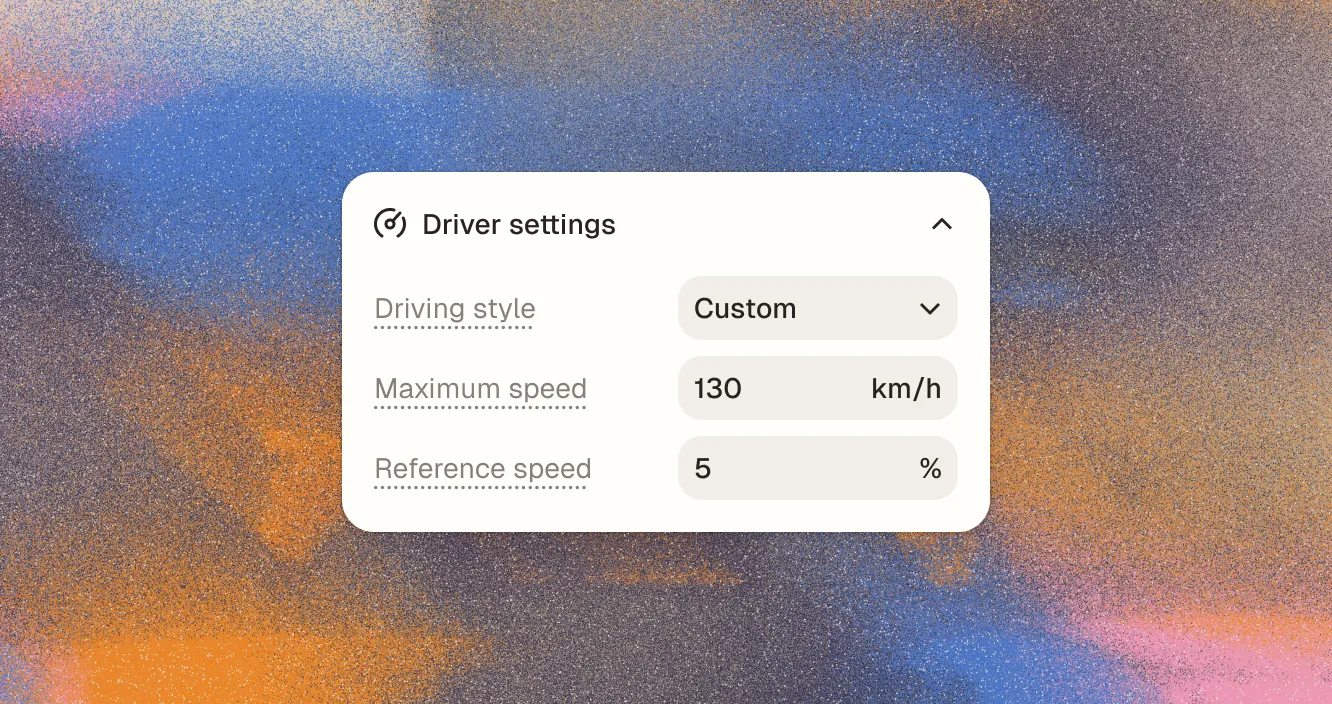
Driving speed directly affects EV energy consumption. To make routes more accurately reflect real-world vehicle behavior and trip duration, we are introducing two new controls: speed factor and driving styles.
Driving styles change estimated arrival time and energy consumption.
- Eco assumes a more relaxed, efficient pace to save battery;
- Sport assumes higher speeds and greater consumption for a quicker arrival.
These features allow you to adjust routing calculations based on how a vehicle is actually driven, resulting in more precise consumption estimates and arrival times.
Updated getRouteStationsWithAmenities Schema
We updated the getRouteStationsWithAmenities query to simplify inputs and support multi-amenity filtering.
- Multi-amenity search: Query multiple amenity categories simultaneously with logical OR filtering;
- Direct time inputs: Pass time windows directly in seconds from the route origin;
- External station id: Access
external_idon the station nodes.
Highway charging preference
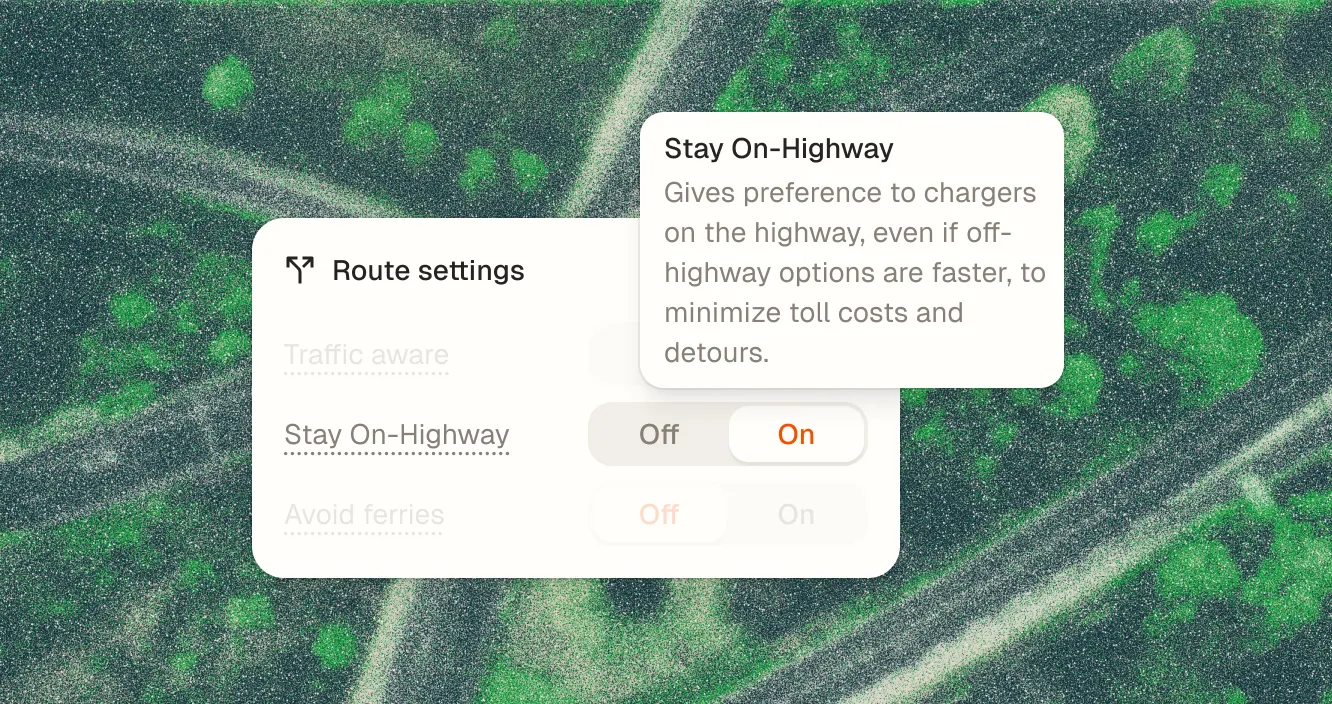
This new option prioritizes chargers located on the highway, even in scenarios where off-highway stations may offer a faster route.
Fixes
- Fixed an issue where routes that retraced their path could end up with a negative state of charge.
- Fixed an issue where the charging time at the final stop was calculated incorrectly when using the
OPTIMIZE_TRAVEL_TIMEcharging mode combined with a custom final state of charge.